Pilates has a way of making small movements feel unexpectedly powerful. A controlled hold, a slow transition, a few centimeters of range: the details ask for attention. That is part of the appeal.
Control is the point.
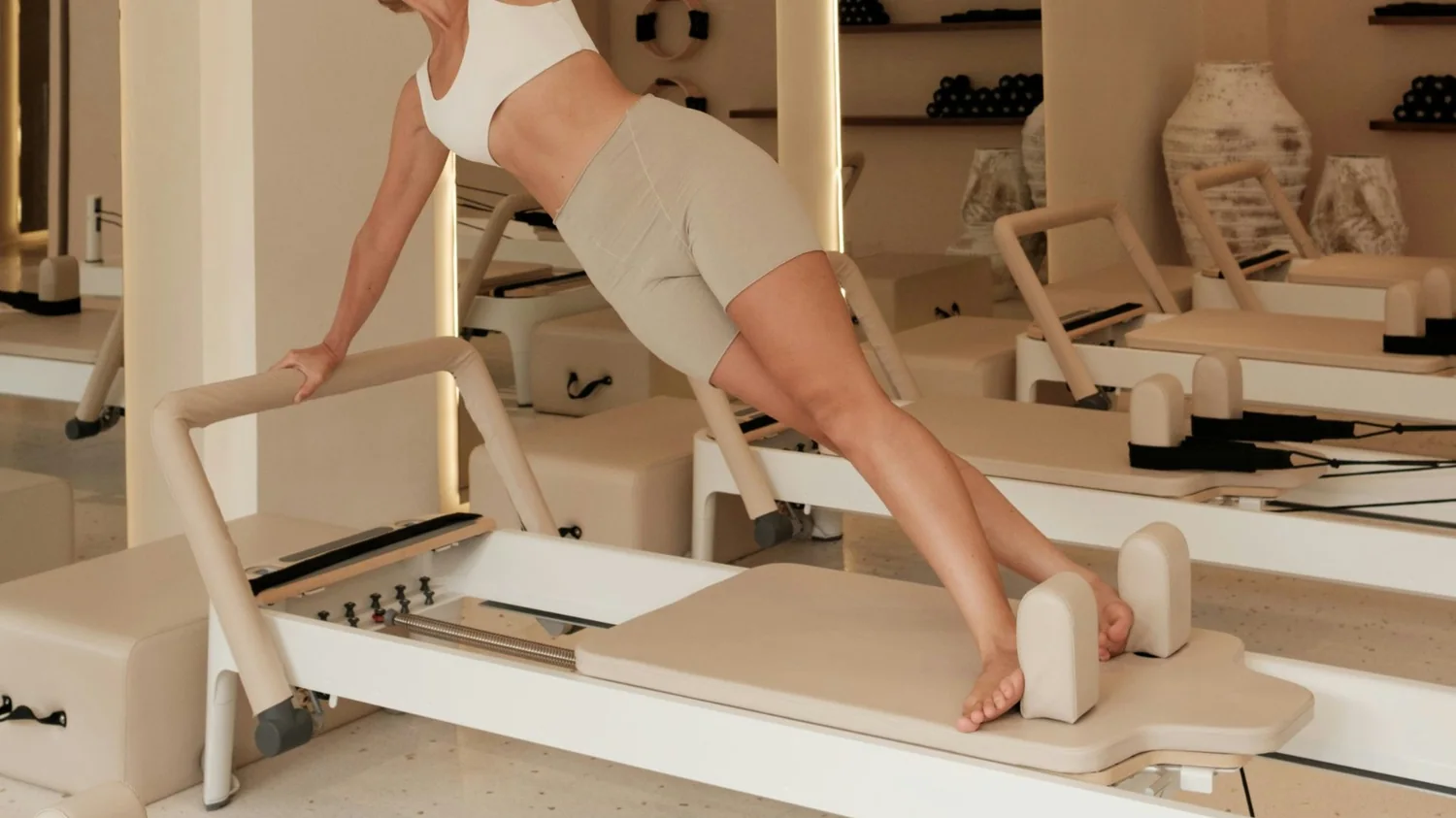
With mat or apparatus work, Pilates invites you to notice alignment, breathing, coordination, and how one part of the body supports another. Classes differ enormously in pace and intensity. Some are gentle and technique-led; others feel closer to strength endurance.
There is no need to pretend one method does everything. Pilates can complement resistance training, walking, running, and other movement you enjoy. The best routine is one that leaves room for variety and can survive your actual calendar.
A better way to choose a class
Look for an instructor who gives useful cues, offers modifications, and pays attention to the people in the room. A challenging class can feel rewarding without requiring pain or perfect choreography. If a move does not feel right, asking for an adjustment is part of training intelligently.
There is also something lovely about the ritual itself: arriving, putting your phone away, working with intention, and leaving with a clearer sense of where your body is in space. A class should invite awareness and attentive movement, regardless of what anyone wears.
The questions behind the routine
Training is a mixture of demands, not a single personality type. The CDC recommends that most adults work toward at least 150 minutes of moderate-intensity aerobic activity each week, together with muscle-strengthening work on two days. Those recommendations are a useful public-health reference, although they do not dictate that every workout must look the same. Walking, strength work, dance and studio classes can occupy different places in a routine, and the right combination depends on ability, enjoyment and what can be repeated realistically.
How to make an informed choice
Choose a class based on the attention and progression you need, not on a particular machine or the appearance of the studio. A patient teacher should be able to modify movement and explain why a cue matters. One useful experiment is to change a single variable for two or three weeks and notice the result. Hold the rest of the routine reasonably steady, then assess comfort, consistency and whether the change solves the problem you identified. That approach makes it easier to distinguish the effect of a sensible adjustment from the excitement of trying something new. It also gives you permission to stop when an addition creates more work than value.
What still needs care
A class may strengthen control and coordination without replacing other forms of physical activity or resistance work. Scientific support is also a question of study design. A plausible mechanism, a small pilot trial and a large controlled study answer different questions, so they should not be presented as interchangeable. Consider whether the researchers measured a meaningful outcome, whether results were replicated and whether the tested conditions resemble ordinary use. When information is incomplete, a measured description is more useful than confident certainty. There is a small editorial discipline in leaving room for uncertainty. It makes it possible to enjoy what is pleasurable about a routine while continuing to learn what science does and does not support. The strongest choice is rarely the loudest one. It is the choice that matches your circumstances and remains useful after the novelty has faded.