A long run, a humid day, a new set of leggings: sometimes the smallest point of friction becomes the thing you remember most. Chafing is common, and it is not a personal failing or a sign that your body is shaped incorrectly.
Friction plus moisture.
Chafing develops when skin repeatedly rubs against skin or fabric, especially when sweat increases friction. Thighs, underarms, bra lines, and waistbands are familiar trouble spots. The cause may be a long session, clothing that shifts, or simply a hot day.
Think ahead.
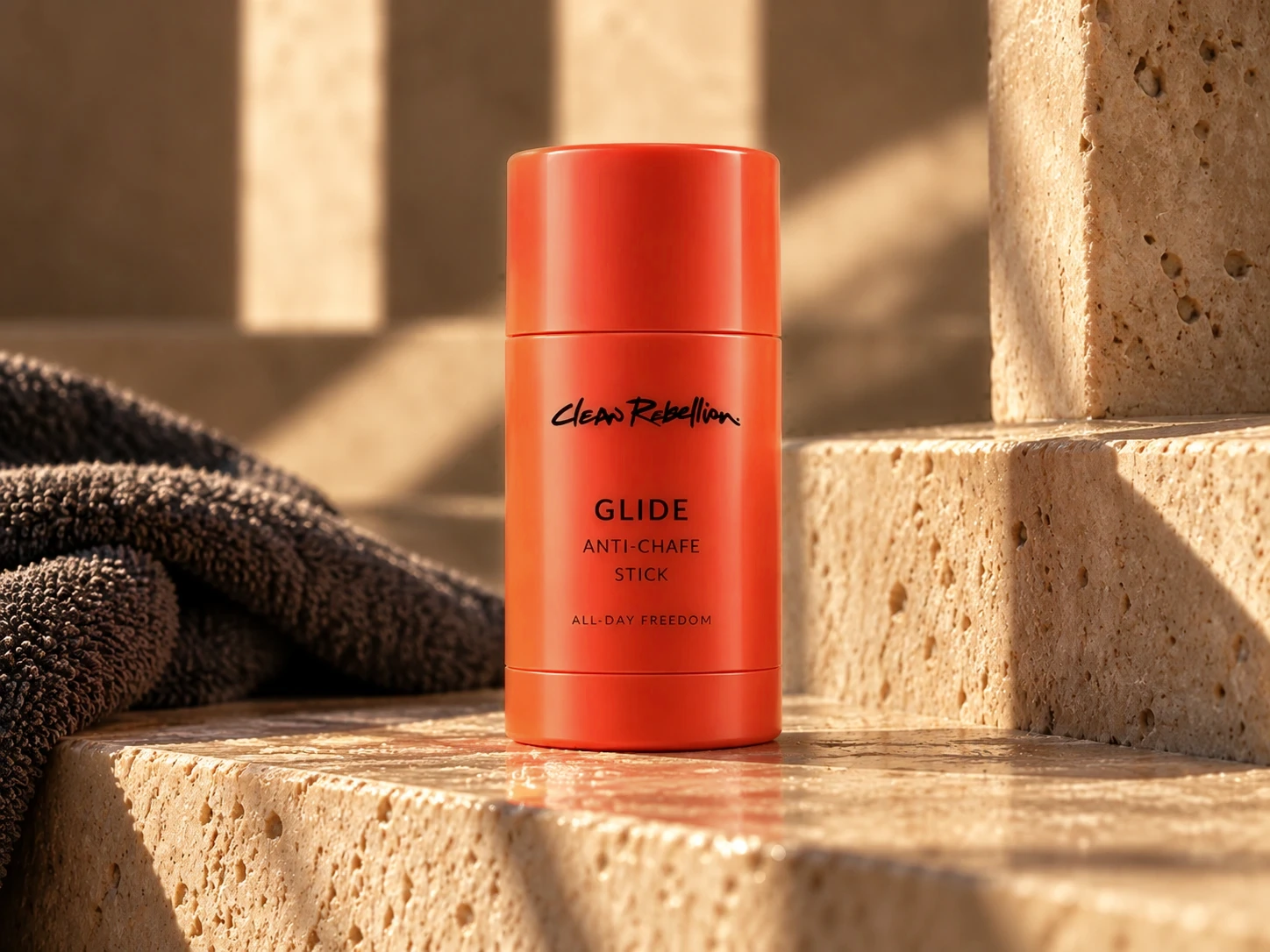
Well-fitting, moisture-wicking clothing can help. Soft seams and adjusting garments that rub can also make a difference. Many people use a glide-style barrier before activity on intact skin in areas where friction is predictable. Test new products on a small patch first, especially if you are prone to irritation.
If the area is already raw, clean gently, reduce friction while it heals, and avoid applying unfamiliar products to broken skin. Increasing pain, pus, marked swelling, or a rash that does not improve deserves medical attention.
Comfort is performance.
It is hard to enjoy movement when your skin is arguing with your clothes. The best solutions are often practical, small, and easy to repeat. That is exactly the territory where a well-designed anti-chafe stick earns a place in your gym bag.
The questions behind the routine
Skin responds to friction, moisture, cleansing and the surrounding environment rather than to a marketing category. Sweat can be part of healthy temperature regulation, yet prolonged damp clothing and repeated rubbing may contribute to irritation or breakouts in susceptible people. Dermatologists recommend practical steps around clean gear, appropriate clothing, sun protection and gentle post-exercise care. How much cleansing someone needs depends on the activity and their skin, and there is no advantage in making a routine unnecessarily harsh.
How to make an informed choice
Identify the exact point of repeated rubbing and address fit, seams, movement duration and a suitable barrier on intact skin. One useful experiment is to change a single variable for two or three weeks and notice the result. Hold the rest of the routine reasonably steady, then assess comfort, consistency and whether the change solves the problem you identified. That approach makes it easier to distinguish the effect of a sensible adjustment from the excitement of trying something new. It also gives you permission to stop when an addition creates more work than value.
What still needs care
Chafing is not the explanation for every rash, and broken or infected skin requires different care. The strongest claims should survive a few straightforward questions: Who was studied, compared with what, for how long, and with what outcome? A product can be attractively made and still lack evidence for a particular medical promise. This is especially important in wellness marketing, where words such as restore, optimize and rebalance can sound scientific without stating what was actually measured. Taken together, these considerations suggest a different standard for everyday care. Pay attention to what changes the quality of your day, use public-health and clinical guidance where it applies, and recognize when a personal preference is simply a preference. That is enough to build a thoughtful practice without treating every new wellness claim as a command.